




Bommarito Chevrolet South County

Blog / St Louis Chevrolet Service

Blog

All St Louis Chevrolet Service St Louis Chevrolet Dealer Chevrolet Models Local Family Fun Local Activities Bommarito Chevrolet South County Service Local Eateries Tips & Tricks History Travel Community Involvement St Louis Used Cars

How Often Should Your Chevy Get Brake Service?

Your Chevrolet has plenty of features to help keep you safe, but the most important is undoubtedly the brakes. Therefore, it's vital to make sure they're in the best condition possible, as badly maintained brakes will put you and your passengers at risk. But how often should you head to your local chevy dealer for a brake service? Read on to find out. How Often Should Your Chevy Get Brake Service? How long the brake pads on your vehicle last depends on a number of factors, including the make of the pad and how much you brake when driving. If you frequently tow heavy loads or are often braking sharply, then you might find that the pads wear out faster. This effect tends to be exacerbated in trucks, as they are often used for carrying or towing heavier cargo. That said, it's usually recommended to change your brake pads at least every 18,000 miles, although many mechanics will recommend getting them changed sooner, perhaps as soon as 7,000 miles. Check the service schedule for your vehicle model to check. However, your mechanic will often have a look at the pads during other service checks, such as tire rotations, and will let you know if they need changing. more Regular Services at Your Chevy Dealer In most cases, your brakes will be serviced as part of your regular service schedule at your local dealership. Our expert technicians will check several aspects of your braking system, starting with the hydraulic brake fluid that makes the brakes work, as well as the various hose connections between your pedal and the disks. They'll also check the condition of the pads and disks, and make sure everything's working correctly. Signs That You Need a Service Sometimes, you might notice problems with your brakes, which will mean you need to go in for service sooner. Some modern vehicles even have a sensor that will light a warning on your dashboard when the pads are running out. Other vehicles have a special feature that makes a horrible screeching noise while braking when the pads are starting to wear out. The other, more worrying sign that you might need service is a loss of braking effectiveness. This can be very dangerous and is a sure sign that you need a service before the brakes fail completely. You might also notice that the pressure from your foot pedal decreases over time, which could be a sign that the brake fluid is leaking somewhere. Ready to get your brakes back to the best condition they can be? Then visit us at Bommarito Chevrolet South County today, and our friendly staff will be happy to schedule a check-up for you.
Time for New Tires? Visit Your Chevy Dealer Today

Your car tires are the only part of your car in contact with the surface. These four relatively narrow pieces of rubber support the weight of your car and allow you to move. For your safety, and that of your passengers and other drivers, it's vital that your tires are always in good condition. Tires can age, and surface conditions can cause wear and tear. When you need new tires, your Chevy dealer can help you with the best tires for your make and model. Do You Need New Tires From Your Chevy Dealer? Lincoln Penny Test This classic test gives a good indication of the condition of the tread on your tires. Every tire has tread, and these raised sections allow your tires to get a firm grip on the surface. Over time, your tire tread will wear down as the tread is abraded by surface conditions. The thinner your tread becomes, the more difficult it is for your tires to grip the surface. The penny test indicates the depth of your tread. Take a Lincoln penny, then turn it upside down and place it in the thinnest part of your tread. If you can see only part of Lincoln's face, your tread is safe. If you can see the top of Lincoln's head, your tread is less than 2/32", and the tread is very thin. For safety, any tires with a tread that thin should be replaced ASAP. more Bulges in the Sidewall Your tires are made from a center steel band with thick nylon supporting bands running vertically through the tread. These bands are then covered in thick rubber and vulcanized to produce a tire. The sidewalls of the tire are the sections of the tire that face outwards. These sections of your tires are made from thinner rubber, as they don't need the reinforcing the tread sections do. This thin rubber of the sidewall can be a problem if they suffer damage. Contact of the sidewall with the curb can pinch the rubber, and this can lead to a bulge forming on the sidewall. A sidewall bulge is dangerous, as it becomes a weakness in the tire. The bulge can give way and cause your tire to blow out. If this happens when you're traveling at speed, it can lead to a serious accident. Driving on a Donut Your spare tire, or donut, is not recommended for long-term use. It's intended to allow you to get to a dealer and fit a regular replacement tire. There's an old saying that a donut is good for 50 or 50. This means the donut should be used for driving for 50 miles or 50 minutes. Donuts tend to be smaller than your regular tires, and they are made from lower-quality rubber. Don't trust your long-term safety to a donut, it will let you down. It's important to replace the donut as soon as you can. If your tires are showing signs of wear, call us ASAP at Bommarito Chevrolet South County.

4 Tips for Choosing Winter Tires for Your Chevy

Winter driving is highly hazardous, and you need the right tires to give you the traction you need on wet and icy road surfaces. A set of good-quality snow tires will provide you with the grip you need for safe steering, cornering, and braking on snow, sleet, and ice. Below your Chevy dealer gives you tips for choosing the right winter tires to ensure your safety in freezing winter weather. Advice From Your Chevy Dealer: 4 Tips for Choosing Winter Tires for Your Chevy 1. Choose Tires for Your Winter Driving Conditions Choosing the correct type of tires for the winter conditions you drive in is crucial. Fitting a set of good-quality snow tires are not just a precautionary measure; it's vital for traction on the ice and snow. All-season tires are perfect to use throughout the year if you only have to navigate wet and muddy roads, but if you drive in severe winter conditions on sleet and ice, you need a set of snow tires to give you maximum traction. Snow tires are more effective in harsher winter weather and ensure a shorter braking distance and increase handling on slippery road surfaces. 2. Check the Rubber, Grooves, and Sipes The rubber composition on snow tires is more flexible and softer in freezing temperatures. When the temperature falls below 45 degrees Fahrenheit, you need a set of snow tires with deep grooves for traction and wide sipes to channel water away. The deep grooves in snow tires direct the ice away from the tire for continued contact with the road. The sipes or slits you see in snow tires prevent skidding and give you that extra grip. The increased traction ensures safe braking and cornering on wet and slippery roads in winter conditions. more 3. Look Out for the Snow Tire Symbols When you pick tires for use in winter, look on the tires' sidewalls for symbols that indicate which conditions a tire is best suited to. Tires designed for use in winter have a three-peak mountain and snowflake and the M+S symbols on the sidewalls. The M+S Symbol If you drive in moderate winter conditions, tires with the M+S symbol will give you the necessary traction for braking, steering, and cornering. If you drive on snow, sleet, and ice, you will need extra traction. The Three-Peak Mountain and Snowflake Symbol If you drive in harsh winter conditions, choose snow tires that give you the traction you need. The tires are specifically engineered to provide the traction required to perform well on freezing roads covered in sleet and ice and have been tested and certified for severe winter conditions. Look out for a symbol on the sidewall that looks like three mountain peaks with a snowflake in the middle. 4. Purchase a Complete Set of Snow Tires Buy a set of snow tires and always mount snow tires on all four wheels to ensure the same traction level to increase stability and safety. If you mount tires with different traction capabilities, it will affect your handling and braking performance. If you only fit snow tires on the front of your car, it will increase the risk of the rear tires skidding. If you only change the rear tires to snow tires, your front tires will lose traction. Mount a set of snow tires to give you the necessary traction when you need it most on freezing winter roads. To ensure your safety on the roads in winter, visit Bommarito Chevrolet South County today for top-quality snow tires and expert installations performed by qualified Chevrolet technicians.

How to Tell When Your Chevy Needs an Alternator Repair

The alternator in your car keeps your battery charged and supplies power to your electrical system. It does this by converting mechanical energy generated by your car's movement into electrical energy. Without an alternator, the battery would go dead and the electrical system wouldn't work. Alternators have a fairly long lifespan, but they will wear out. As your Chevy dealer in St. Louis, MO, we can help you when you need an alternator repair. How to Tell When Your Chevy Needs an Alternator Repair by Your Chevy Dealer in St. Louis, MO Check Engine Light Stays On This light should go on when you start your car and then switch off. If the light stays on, it is a warning that something is wrong with your engine. There is not necessarily a fault with your alternator, but it is one of the components we will check. The warning code displayed will reveal the problem, and then we will fix it. Dead Battery The battery provides power to start the engine and it has an average lifespan of 3-5 years, after which it should be replaced. If your battery is fairly new and it dies, one potential reason is that the alternator is weakening and is no longer charging it. more Electrical Glitches A dying alternator tries and fails to supply enough electrical power to the system. Strange electrical glitches can appear, for example, windshield wipers may become sluggish or the power windows can stick in the open or closed position. These problems appear randomly, but they will become more frequent and more serious as the alternator fails. Electrical Cable Problems Electrical cables snake through the engine compartment to connect the electrical system. If these cables are damaged, they may not be able to effectively transmit power. The alternator can be working correctly but as it tries to force more electricity through the damaged wires, they will heat up. If you smell burning wiring, contact our service department. Unusual Noises Every driver is familiar with their car's sounds, but if you hear strange sounds from the engine this can mean that your alternator is starting to wear out. A knocking sound in the engine, for example, could be the sound of a loose alternator belt hitting other components when your car moves. Bearings on the alternator pulley can also wear out and start to make grinding noises. Starting Problems The battery provides the power to start the ignitor, but if your alternator is failing it may not be able to fully recharge your battery. The battery will drain, and may no longer have enough power to easily start your car. A delay in starting could be the result of a damaged alternator, a weak battery, or even an ignition problem. If you suspect your alternator is failing, call our service department at Bommarito Chevrolet South County. Our expert technicians will be happy to examine your alternator, and if it needs to be replaced we will fit a new OEM one for you.

7 Chevy Maintenance Tips to Keep Your Car in Great Shape for Years

Taking care of your car and ensuring you get the best out of every mile starts with Chevy maintenance. Regular checkups at your St. Louis, MO, Chevrolet Dealer will ensure that your engine is running smoothly, saving you heaps of cash on gas and repairs. The following tips will help you keep your Chevy in great shape and on the road for longer. St. Louis, MO, Chevrolet Drivers: 7 Chevy Maintenance Tips to Keep Your Car in Great Shape for Years 1. Service Your Chevy Regularly Regular services are essential if you want your Chevy to stay in excellent running condition. The service schedule for your specific model is in your owner's manual. If you stick to the factory-recommended maintenance intervals, your Chevy will run smoothly, and you will save money on gas and repairs. Your car will also last longer, and an up-to-date service record will increase the resale value when you decide to trade your Chevy in for a new one. 2. Change the Oil at the Recommended Intervals One of the most crucial maintenance services is an oil change. Oil lubricates the moving parts, reduces friction, cleans and cools the engine. If you drive a newer Chevy, the Oil Life Monitoring System (OLMS) will send you a Change Engine Oil Soon message to warn you when oil changes are required. The factory recommends that older Chevrolet vehicles have an oil change every 3,000 to 7,500 miles or every six months. You will also find the factory-recommended oil change intervals in your owner's manual or ask your Chevrolet technician for assistance. more 3. Rely on Quality Maintenance and Repair Services When your Chevrolet needs maintenance or repairs, rely on the qualified Chevrolet technicians at your Chevrolet dealership. The technicians are factory trained and perform expert services utilizing cutting-edge technology and equipment. They know which inspections, adjustments, and replacements are required to keep your Chevy in tip-top shape. 4. Install Genuine OEM Chevrolet Parts When it comes to replacement parts, it's best to install Genuine OEM Chevrolet Parts that are reliable and durable, and engineered explicitly by General Motors for your vehicle. Your dealership has an inventory of Genuine OEM Chevrolet Parts, and knowledgeable Chevrolet technicians will assist you in finding the correct replacement part quickly. You can also order parts online from your Chevrolet dealership's website or speak to a service specialist if you need assistance. 5. Perform Routine Checks Yourself Routinely check your car's fluid levels and top them off if necessary. Look out for puddles on the ground under your car that indicate fluid leaks. Check the battery and the connections regularly and keep the terminals free of buildup. Always ensure that your car's tires are inflated to the proper pressure levels and rotated at the recommended intervals. 6. Don't Ignore Noises and Odors Believe it or not, strange noises and unpleasant odors are warnings that something is not quite right with your Chevy. When you smell an odor or hear a noise that you are unfamiliar with, schedule an appointment at your Chevrolet dealership so that a qualified Chevrolet technician can determine what is causing the problem. Don't allow a minor issue to turn into an expensive repair or replacement. 7. Heed Dashboard Warning Lights If there is a problem with your Chevy, the dashboard lights will warn you. Never ignore a dashboard warning light to avoid further damage and repairs that could cost you a lot of money to fix. As soon as you notice a dashboard warning light is on, schedule an appointment with your Chevrolet technician to repair the issue. Perform regular maintenance, and your Chevy will always get you where you need to go. Contact Bommarito Chevrolet South County today. Our team of Chevrolet experts will take care of all your vehicle requirements.

4 Reasons to Replace Your Chevy Parts at Your St. Louis Chevrolet Dealer

There comes a time in every car owner's life when a part is going to need to be replaced. If that time has come for you, you might be wondering where you should get your parts replaced. Here's why you should get your Chevy parts from your St. Louis, MO Chevrolet dealer. 4 Reasons to Replace Your Chevy Parts at Your St. Louis, MO Chevrolet Dealer 1. You'll Get OEM Parts One of the best things about getting replacement parts from your dealership is that you can count on these parts being the right ones for your car. When you look for car parts, you have two options: aftermarket parts and original equipment manufacturer parts. Aftermarket parts come in a range of different qualities, and you'll need to make sure you're doing your research when you buy them to make sure you're getting the right ones. But when you get OEM parts from your dealer, you'll know you're getting the right parts for your car. 2. The Mechanics Are Experts Corner mechanics work with a wide variety of brands and models. Unfortunately, that usually means that they only know the basics about many of the brands that they work with. If you need some more complex work on your vehicle, going to your dealer is your best bet. The mechanics at your local dealership work exclusively with your brand of vehicle. That means they know exactly what your car needs, and they'll make sure that your vehicle gets the expert touch that it deserves. more 3. Service Will Be Fast When you need to get a part replaced and you bring it to a corner mechanic, you may need to leave your vehicle there for a long time. Even for simple replacements, you might end up having to leave your car with the mechanics for a couple of days. But dealerships have the resources and tools that they need to make sure that you're getting service and repairs that are fast and effective. If you only need a minor part replaced or an easy repair, then you'll only need to leave your car with the mechanics for a few hours. 4. Excellent Customer Service There are plenty of mechanics that offer great customer service, but you may have experienced some pretty poor service with certain ones. Getting good customer service is an important part of getting your car repaired. But sometimes it can be hard to find a mechanic that will offer you the friendly, patient service you need. Dealerships are proud of the products that they offer, and they're also proud of the services that they provide. That's why they'll work hard to provide you with customer service that will go above and beyond your expectations. If your car needs a part replaced, it's important to make sure you're going to someone that you can trust to do the repair. The mechanics at your local dealership will be more than happy to offer you high-quality parts and service. Visit us today at Bommarito Chevrolet South County to get your next repair.

Top 6 Signs Your Chevy Needs a Brake Repair

Brake servicing is a vital part of your vehicle's maintenance, so you need to get a brake repair as soon as anything seems wrong. Your brakes will take care of you if you take care of them, so learn the signs that something is amiss. Visit your St Louis, MO Chevy dealer when you have a problem. Top 6 Signs Your Chevy Needs a Brake Repair From Your St Louis, MO Chevy Dealer 1. Your Brake Light Is On In some models, your brake light will switch on when it's time for a regular checkup on your brakes. However, it can also switch on when something is going wrong in your vehicle. Both causes warrant an immediate visit to the dealer, so be sure to make your way over ASAP. 2. Your Brakes Start Squealing New noises caused by your brakes aren't always cause for alarm. You might have a pebble or some other debris lodged in your brakes. However, it could also be your brake pad wear indicators making themselves known. The brake pads may have worn down and exposed a piece of metal that scratches against the rotors to create this squealing noise. It will often sound like a high-pitched, metallic shrieking. You need your brake pads replaced as soon as possible to ensure your vehicle stays in good condition. more 3. Your Brakes Start Grinding Grinding noises are always bad news. There's likely something scraping against a metal contact point, and that's going to cause further damage if you ignore it. Get yourself to the dealer as soon as you can, and be sure to have highly trained experts examine and repair your brakes. 4. Your Vehicle Vibrates or Wobbles When You Brake If your vehicle or steering wheel starts vibrating or wobbling when you use the brake pedal, then your rotor may be uneven. The problem will get worse if you ignore it, so you'll need to repair it as soon as you can. 5. Your Vehicle Is Leaking Fluid Brake fluid creates hydraulic pressure against the brake caliper, so you won't be able to stop if your vehicle has too little brake fluid in it. You need to check on your brake fluid level often, and stop by your dealer if you notice your fluid level is too low. If you're fluid level drops rapidly, then you may have a brake fluid leak. 6. Your Brakes Feel Soft If your brakes feel soft when you use them, then there may be moisture or air in your braking system. You might also have an issue with your master cylinder. Your brakes will often become less responsive after they become soft, so get to the dealer for a repair as soon as possible. You really don't want your brakes to become less responsive, as it will put you in immediate danger. Have you noticed any of the problems above in your vehicle? It's time to repair those brakes. Stop by Bommarito Chevrolet South County so we can fix you right up!

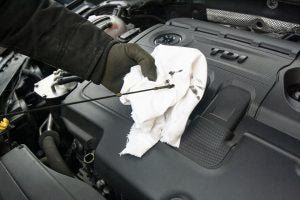
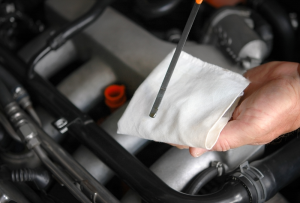
Service technician checking the oil with a white cloth. | Chevy service center in St. Louis, MO

How Long Has It Been Since Your Last Chevy Oil Change?

Getting a Chevy oil change regularly is essential if you want your Chevy to continue working correctly. Oil changes ensure your engine runs smoothly, your gas mileage remains steady, and your car doesn't stutter or break down while driving. However, how often should you really get an oil change? Has It Been 3 Months? If it has been three months since your last oil change, it might be time for another one. Generally, experts recommend changing your oil every three to six months. Twice a year should be the minimum. Alternatively, you can go by miles and change your oil every 3,000-6,000 miles. Signs You Need a Chevy Oil Change If you have not been keeping track of how long it has been or how many miles you have driven since your last oil change, some other telltale signs can tell you if it is time for an oil change. The first thing to look at is your OLS. OLS stands for Oil Life System, which is an oil monitoring system. Most Chevys will have this light, which will turn on when it is time to service your car. It monitors things such as how many miles you have driven and engine temperature. Other signs you might need an oil change include a rattling engine or dirty oil. Since oil is vital for the lubrication of the engine, rattling noises may mean you need new oil. Shaking, excessive exhaust, and engine stuttering can also be signs you need an oil change. more Benefits of Changing Your Oil Frequently Increase Your Gas Mileage Clean oil is essential for the smooth operation of your vehicle. You will get more miles out of your gas when you change your oil frequently, thus saving money and reducing the number of times you need to stop at a gas station on longer trips. Increase Your Engine's Lifespan Oil provides lubrication, which the engine needs for components to run smoothly. Without lubrication, parts can get worn out. Changing your oil a few times a year will keep your engine running smoothly so that it stays powerful. It will also prevent your engine from heating up, which can lead to other problems. You will be able to keep your car longer, and you will experience fewer engine issues. It's Better for the Environment When you don't change your oil, hydrocarbons build up inside your engine. Then, when you use your car, you burn those hydrocarbons, and the smoke gets released into the atmosphere. That is not good for the environment, so if you want to be environmentally friendly, change your oil more frequently. You will reduce emissions and will have a better chance of passing emissions inspections. Visit Bommarito Chevrolet South County to schedule your oil change. If it's been a while since your last inspection, you can schedule an inspection, and we'll determine whether it's time for an oil change or not.

Chevrolet sign and logo on the side of a Chevrolet dealership. | Chevy dealer in St. Louis, MO

6 Signs Transmission Problems Require Repair From a Chevy Dealer

Fixing your car's transmission problems can range from a simple repair to a costly rebuild. But how do you know if your vehicle needs minor repairs or has serious issues that require immediate attention? Watch out for the signs below that you need to have your transmission checked and serviced at your trusted Chevy dealer. 1. Foul Smells From the Engine A long trip can lead to discovering new scents on the road. However, keep an eye out for odors that appear to be coming from your engine. A smoky or foul-smelling odor is a sure sign of transmission system problems. When transmission fluid becomes low, it is prone to overheating and burning. In addition, your engine might have to exert more power, causing the temperature in your car to rise and result in a heater core meltdown. 2. Clunking, Machine-Like Sounds Strange noises suggest that something must be wrong with your transmission system. If you're driving a car with a manual transmission, you may notice machine-like sounds while you're shifting gears. As soon as you hear the odd sounds, it's best to schedule a maintenance service to address the issue right away before your transmission system completely fails. more 3. Excessive Noise While in Neutral Is your car in neutral, and yet you hear bumping sounds? This sign indicates an issue with your transmission system. An auto inspection will let you know if your transmission is low on fluid or whether you have used the wrong fluid type. Your car bearings or gear teeth may also be out of alignment and require replacement, hence the excessive noise. 4. Inappropriate Response During Gear Shifts Your transmission is designed to smoothly fit into the appropriate gear as soon as you trigger the shift. However, if your vehicle doesn't respond right away, you might have a problem with your car's transmission. Delayed shifts are usually the result of a faulty transmission system. In addition, you might notice noises in your engine that don't match your driving speed. 5. Transmission Fluid Leaks and Spills Problems in your transmission system can result in leaking fluid. How can you tell if the leak in your driveway is coming from your transmission system? In general, transmission fluids look red and have a distinctively sweet aroma. However, it can have a strong, burnt scent if you're also dealing with engine overheating issues. 6. Dragging Clutch A dragging clutch is a classic sign of problems in manual transmission cars. Do you have an excessively slack clutch pedal that makes it difficult for you to disengage? If your clutch can't apply engine power to the drivetrain, changing gears becomes impossible. In addition to the clutch drag, you might also hear a screeching sound. Does your car show any of the above signs? Ignoring the warning signs of transmission issues could cost you in the long run. Contact Bommarito Chevrolet South County and don't miss the chance to keep your vehicle performing at its best. Schedule a service appointment with us, and you can be sure that our expert-trained team will deliver the service you deserve!

Contact Us

Fill out this form below and we'll contact you shortly
*Required Fields